|
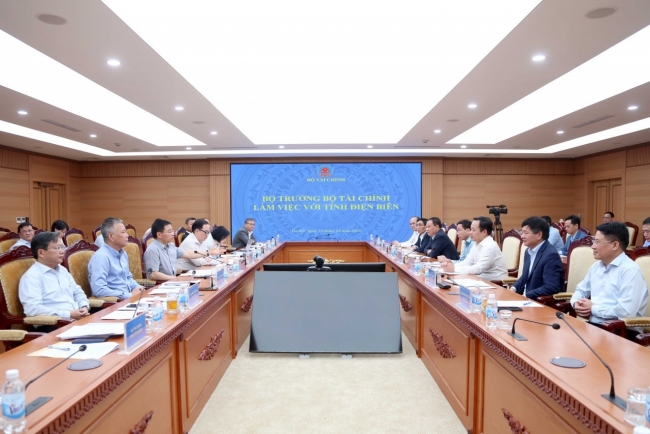
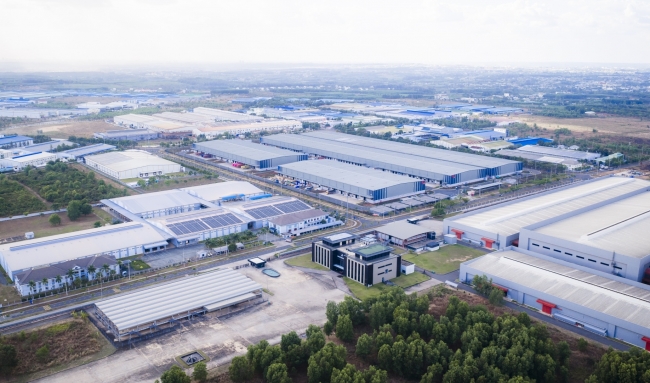
| Illustrative photo |
On September 21, 2024, the Prime Minister issued a decision on Vietnam’s semiconductor industry development strategy until 2030 with a vision towards 2050, creating a legal framework to unlock the country’s potential and promote its strengths and advantages to make Vietnam an important destination in the global semiconductor industry supply chain.
During discussions about socio-economic development at the 8th session of the 15th National Assembly last week, many delegates emphasised that human resources are a critical issue, with up to 10,000 engineers annually to implement the strategy.
However, according to calculations, Vietnam currently can only meet about one-fifth of this demand, creating a large workforce gap, especially the shortage of chip design engineers and materials scientists. This challenge is particularly significant given the intense competition in an industry that countries are already pursuing.
The shortage of the semiconductor workforce in both quantity and quality stems from multiple causes, but the fundamental issue lies in Vietnam’s current training programmes, which have many limitations and have not met international standards.
Universities and colleges are not fully equipped with modern equipment for training and practice, while the number of lecturers with deep expertise in semiconductor circuit design remains small, resulting in uneven training quality.
Additionally, many institutions’ training programmes have not been updated to reflect the latest advances in semiconductor technology, and cooperation between universities and businesses remains limited, leading to a large gap between theoretical knowledge and practical production. Vietnam’s innovation ecosystem has not developed strongly enough, limiting the ability to generate new technological ideas.
Deputy Trinh Thi Tu Anh from Lam Dong Province believes that special attention is essential for developing and implementing specialised training programmes in the semiconductor industry.
The government needs to introduce specific solutions to promote public-private partnerships, improve the quality of semiconductor workforce training and encourage private enterprises to participate more deeply in the management and operation of training facilities.
Simultaneously, favourable conditions should be created for the private sector to share financial resources, infrastructure, and other resources to maximise dynamism and creativity in high-quality human resource training.
During the review and amendment of laws related to public investment, science-technology, and public asset management, specific regulations need to be added to create a favourable legal corridor for these cooperative activities.
Many delegates emphasised that while human resources should be prepared based on forecasts and long-term vision, they must closely follow market demands to avoid missing opportunities.
This can be achieved by promoting agreements on workforce needs between training institutions and domestic and international semiconductor companies to ensure employment outcomes.
The government should also proactively seek and establish national cooperation agreements on semiconductor workforce provision with countries experiencing labour shortages.
Besides long-term training, such as general education undergraduate and postgraduate education, the focus must be placed on rapid, short-term training, preferably through retraining, advanced training, and transitional training for IT engineers, software engineers, and electronic engineers.
To ensure sufficient teachers, instructors, facilities and curricula, there must be teacher retraining, the attraction of foreign semiconductor instructors, enhanced cooperation between semiconductor companies and training institutions, and strong state investment in training facilities.
Power supply is equally important for Vietnam to attract investment in the global semiconductor chip supply chain. The semiconductor industry requires stable power sources to meet quantity requirements and ensure quality standards. Unstable power supply is a major challenge for semiconductor chip production, especially in developing countries like Vietnam. Fluctuations in voltage, frequency, and power quality can cause serious consequences, affecting product quality, productivity and efficiency.
Using clean energy sources is becoming a mandatory requirement for investors. Therefore, the government needs to invest heavily in energy development to ensure sustainable power supply for the semiconductor industry, such as green energy, renewable energy, and new energy sources, while simultaneously ensuring stable baseline power supply in a context where hydroelectric power has limited development potential and coal power plants must be gradually phased out according to the roadmap to 2050.
Commenting on the draft amended Electricity Law, National Assembly delegates noted that some investors have calculated that with the current development pace, Vietnam risks facing power shortages, and thus, they are reconsidering whether to invest in Vietnam. The current challenge is how to ensure sufficient energy for development. Therefore, the amendments to the Electricity Law need to have a broad, long-term vision.
At this crucial turning point for the semiconductor industry, with its potential and opportunities, facing many challenges, National Assembly delegates expressed confidence that if Vietnam can build a complete ecosystem and invest strongly in human resources, it can effectively capitalise on opportunities from new investment flows to emerge as an ideal destination for the global semiconductor industry./.