|
| Soaring prices of oil fuel concerns over the inflation |
Exchange of camera data 24 hours a day, seven days a week
Customs authorities have focused on the type of processing and importing raw materials for export production and export processing, both ensuring management and studying the implementation of new unified regulations, creating favorable conditions, and solving problems for enterprises.
One of the main highlights is the implementation of Decision 247/QD-TCHQ, which governs how export processing enterprises connect and exchange data on surveillance camera systems with customs authorities. As a result, export processing enterprises must install surveillance camera systems at all doors, entrances, and storage locations for goods. Enterprises must also create a diagram of the location of goods storage, and the location of the installation of surveillance cameras with serial numbers, take notes to monitor, manage, and send to the customs sub-department for one copy when checking the conditions of customs supervision inspection. Camera image data is linked to customs authorities online.
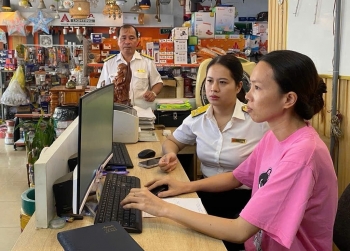
The Customs Sub-Department in charge of export-processing enterprises develops a monitoring and unexpected image inspection plan based on risk assessment and management principles and creates a monthly monitoring plan to ensure that all export-processing enterprises are monitored for inspection at a specific time during the month of rotation. At each customs sub-department, they manage export processing enterprises and assign officials to be in charge of supervising the management of export processing enterprises via the surveillance camera system.
Customs officials are responsible for securing connection information, accounts, connection passwords, and image data exchanged through surveillance camera systems of export processing enterprises. In addition to the aforementioned camera system, the General Department of Customs has completed the review and determination of professional problems related to processed goods, exporting production, and export processing, as well as the development of management requirements and information criteria in line with the digital customs model. The use of modern technology to monitor this specific type of goods has assisted customs authorities in managing more effectively.
According to Tran Manh Hung, Deputy Director of the Hai Phong Customs Department, in the process of monitoring and detecting inappropriate import data and export time, the customs sub-department will make decisions on inspection and supervision as well as direct inspection at production facilities to help enterprises comply with legal regulations, as well as give enterprises the opportunity to explain or support and create favorable conditions for enterprises if facing difficulties.
Lack of focus and synchronization
However, because the use of information technology in processing and export production activities is a new technology, enterprises must prepare infrastructure as well as the necessary technical conditions to deploy experimental connections with customs authorities, according to the Customs Supervision and Management Department.
Furthermore, the number of enterprises engaged in large-scale manufacturing, export production, and export processing activities is distributed across most provincial and municipal customs departments. The inspection and supervision period lasts from the time of importation, the manufacturing process, until the product is exported or the purpose of use changes, causing difficulties for the customs authority's management and supervision, particularly in the management of norms, reports on the settlement of the use of raw materials are being implemented on the basis that enterprises declare themselves to be responsible.
Furthermore, the requirement for enterprises to be monitored in turn each month easily occurs in an unfocused and inefficient situation. The number of cameras in enterprises is high, and the monitoring is primarily through small computer screens, making it difficult to monitor and manage. Moreover, the enterprise database has not been centralized or synchronized.
Recently, the Binh Duong Customs Department has proposed developing software to manage enterprises involved in manufacturing, exporting production, and export processing by connecting and providing information between customs authorities and related organizations and individuals. This system alerts users to make decisions at relevant business steps.
In general, all information provided by the enterprise will be received, processed, analyzed, and evaluated by the system using 4.0 technology platforms to provide warning information and assist users in making decisions at relevant business steps. Meanwhile, the Binh Phuoc Customs Department stated that in order to eliminate deficiencies in the management and supervision of processed goods, export production, and export processing, an information system for customs management of this type is required to ensure the function of inspection, supervision, and management from importation, production, and to the exporting of products.
According to Phung Thai Ha, Deputy Head of Supervisory Office 2, Customs Supervision and Management Department, the system is still in the process of construction. In reality, the connection between the systems has not been completed, so customs officials must have a lot of access to individual systems to be able to synthesize and evaluate the data. Therefore, standardization and a large enough data connection will assist customs authorities in reducing manual human resources while quickly identifying fraudulent acts in this field./.