

Heineken to shift production from Singapore to Vietnam and Malaysia
Dutch brewer Heineken will shift its brewing production from Singapore to Vietnam and Malaysia as part of its strategy to build a more agile regional supply approach.

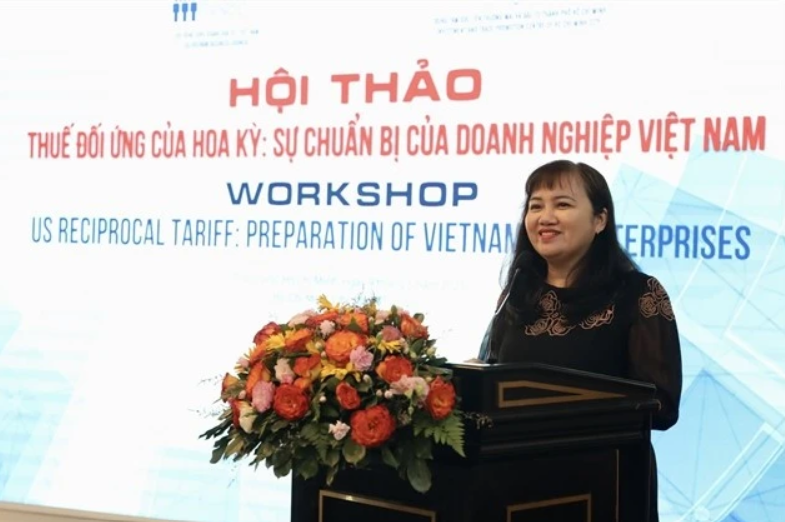 |
| Cao Thi Phi Van, Deputy Director of the Investment and Trade Promotion Centre, speaks at the “US Reciprocal Tariff: Preparation of Vietnamese Enterprises” workshop in HCM City on May 9. (Photo: courtesy of ITPC) |
Amid unpredictable fluctuations in US tariff policies, Vietnamese businesses must take a proactive and strategic approach to sustain their exports to this key market, experts emphasised at a workshop held in Ho Chi Minh City last week.
The workshop, titled “US Reciprocal Tariff: Preparation of Vietnamese Enterprises,” was hosted by the Investment and Trade Promotion Centre of Ho Chi Minh City (ITPC) in collaboration with the US-Vietnam Business Council, drawing strong participation from the local business community.
In her opening remarks, ITPC Deputy Director Cao Thi Phi Van reaffirmed the US position as Vietnam’s largest export market.
“Over the past five years, Vietnam has consistently maintained a substantial trade surplus with the US, rising from approximately 63.4 billion USD in 2020 to nearly 106 billion USD in 2024. Currently, Vietnam - like many other nations - is subject to the US’s reciprocal tariff measures.”
In response to this challenge, the Vietnamese government is intensifying negotiations with the US to foster a balanced and sustainable bilateral trade relationship.
Domestically, efforts are being intensified to monitor product origin, boost the domestic market, and facilitate bilateral investment projects.
Van also encouraged businesses to view these challenges as catalysts for growth and innovation.
She emphasised that the municipal administration and the business community are advancing strategic initiatives to diversify markets, products, and supply chains, enhance product quality and competitiveness, and remain agile in the face of global economic shifts.
In particular, leveraging the benefits of the 17 effective free trade agreements will serve as a critical foundation for expanding development space and strengthening international integration.
At the seminar, Dr. Tran Son, Assistant Professor of Business at SUNY Cobleskill, New York, and business development advisor at the US-Vietnam Business Council, highlighted the shift in US trade policy from “free trade” to “strategic trade” to focus on industrial policy and national security. This shift, he noted, presents both opportunities and challenges for trading partners.
Vietnam is viewed as a China+1 destination and the US is watching closely for anti-dumping, labour standards, mislabelling and rule-of-origin violations, Son said.
The US tariffs are here to stay, requiring Vietnam to adopt a proactive and strategic approach. Agility, trust, and innovation are key factors for success in this environment, he affirmed.
He outlined three key strategic options for Vietnamese firms: ensuring full compliance with regulations by strengthening supply chain documentation, maintaining transparent origin labeling, and early adoption of US and EU standards; moving up the value chain by shifting from Original Equipment Manufacturer (OEM) to Original Brand Manufacturer (OBM), investment in branding, innovation, and customer development; and actively working with trade associations and policymakers to position Vietnam as a reliable trade partner.
He also called for a long-term national and industry-level branding strategy to reposition Vietnam as a producer of high-value and distinctive products, particularly in handicrafts, agriculture, and seafood.
From a practical logistics perspective, Mohammed Selia, CEO of US-based FulfillPlus, provided an in-depth analysis of US import regulations across industry categories.
A fundamental principle exporters must understand, he said, is that US import duties are paid upon clearance at the port of entry, determined by the HTS code, declared value, and country of origin. Each industry requires thorough research and preparation.
Apparel and textiles are subject to tariffs ranging from 10% to 30% and must comply with strict labeling requirements from the Federal Trade Commission (FTC) and accurate product classification to avoid unnecessary delays.
The furniture industry, particularly wood products, must be wary of anti-dumping duties and comply with the Lacey Act, which prohibits trade in illegally sourced plant materials. Certain US states, such as California, have additional requirements for flame-retardant materials.
For agricultural and seafood products, FDA/USDA registration and advance import notice are mandatory. In many cases, maintaining the cold chain is also required.
In contrast, handicraft and artisan products often enjoy low or zero import duties, though it is essential to avoid materials derived from prohibited animal species.
To achieve long-term success in the US market, Selia emphasised the importance of maintaining local inventory to support faster delivery and improve customer satisfaction.
He also stressed the need for continuous investment in product quality, branding, attractive packaging, and partnering with reputable US logistics providers as a key strategic advantage./.